Describe:
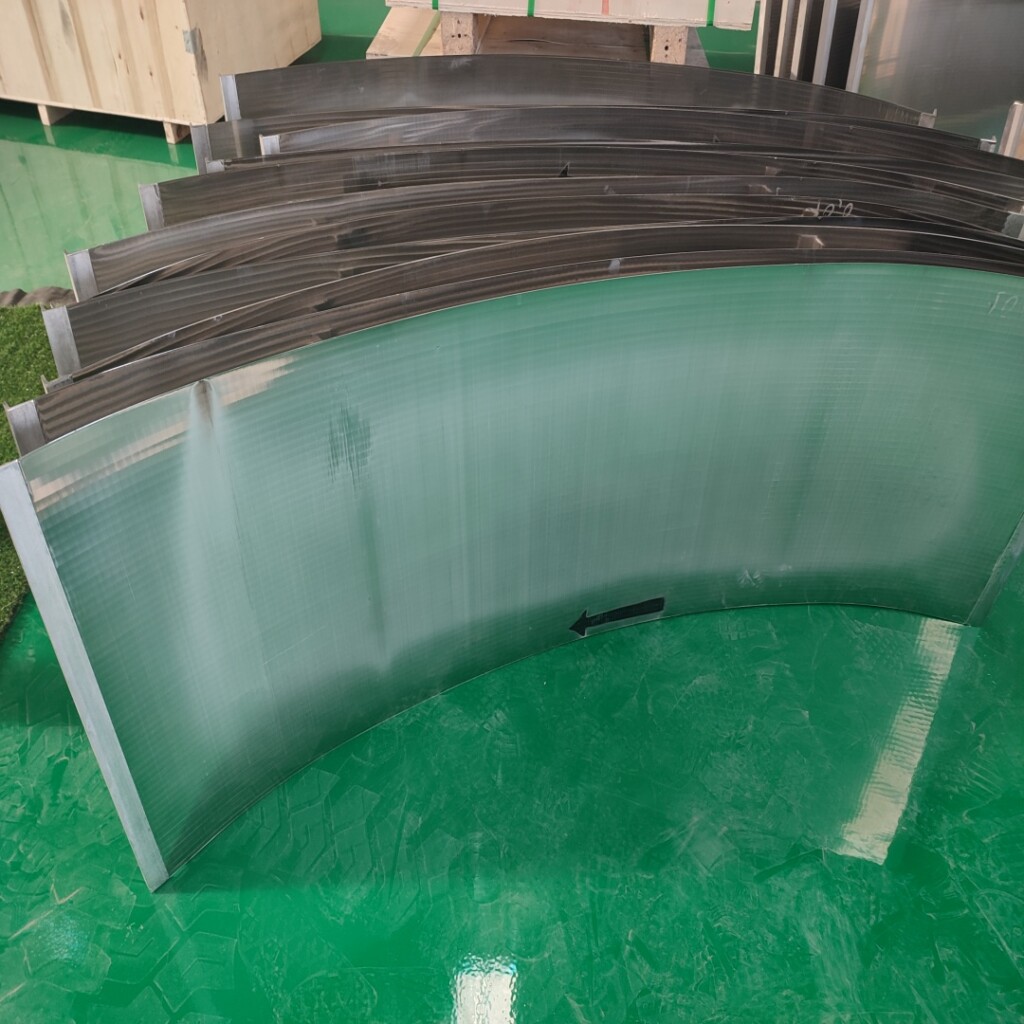
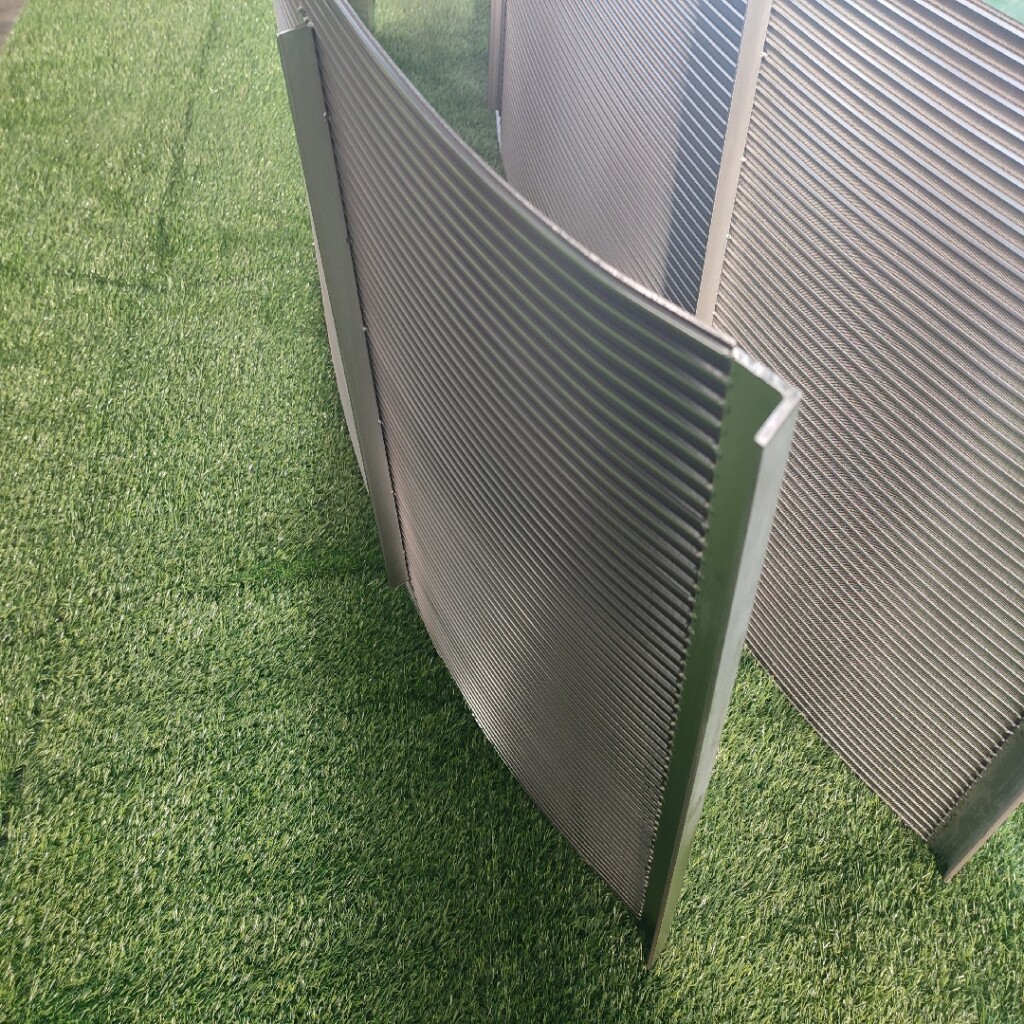
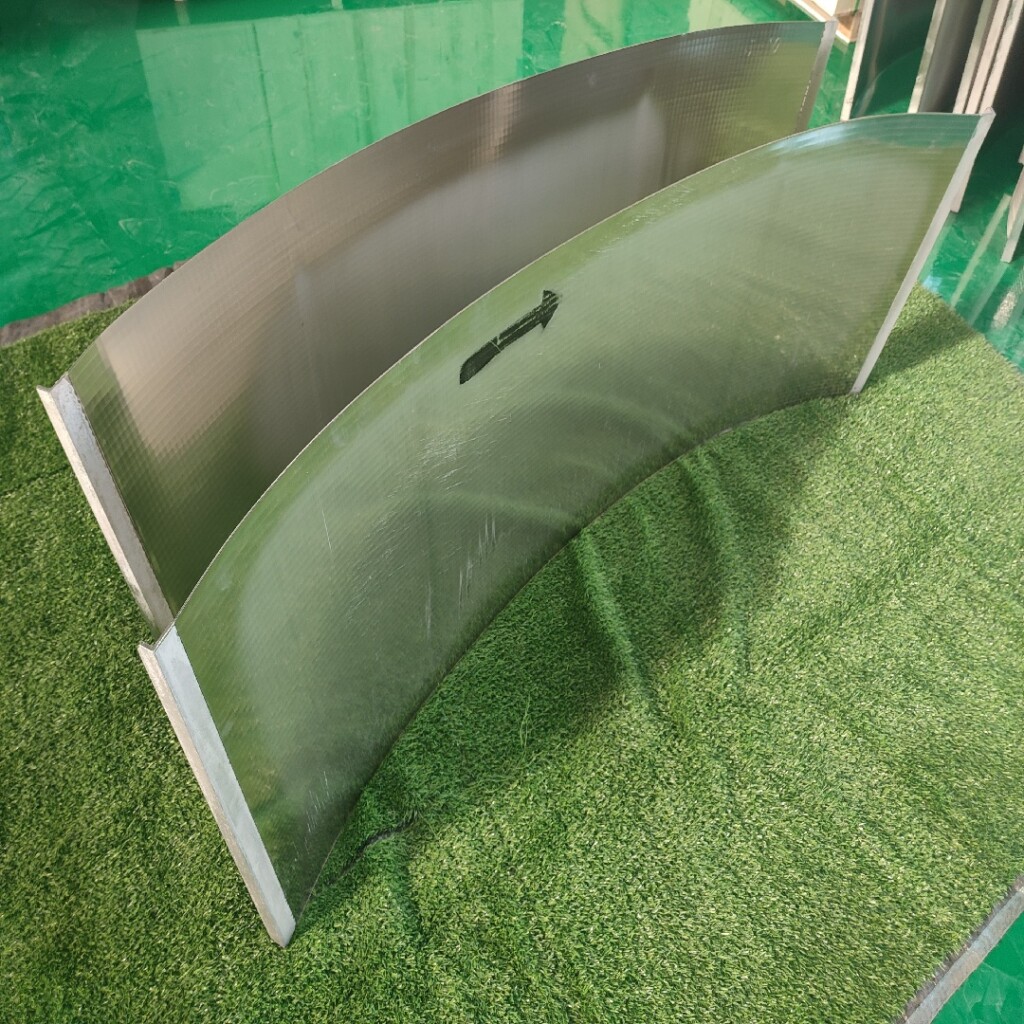
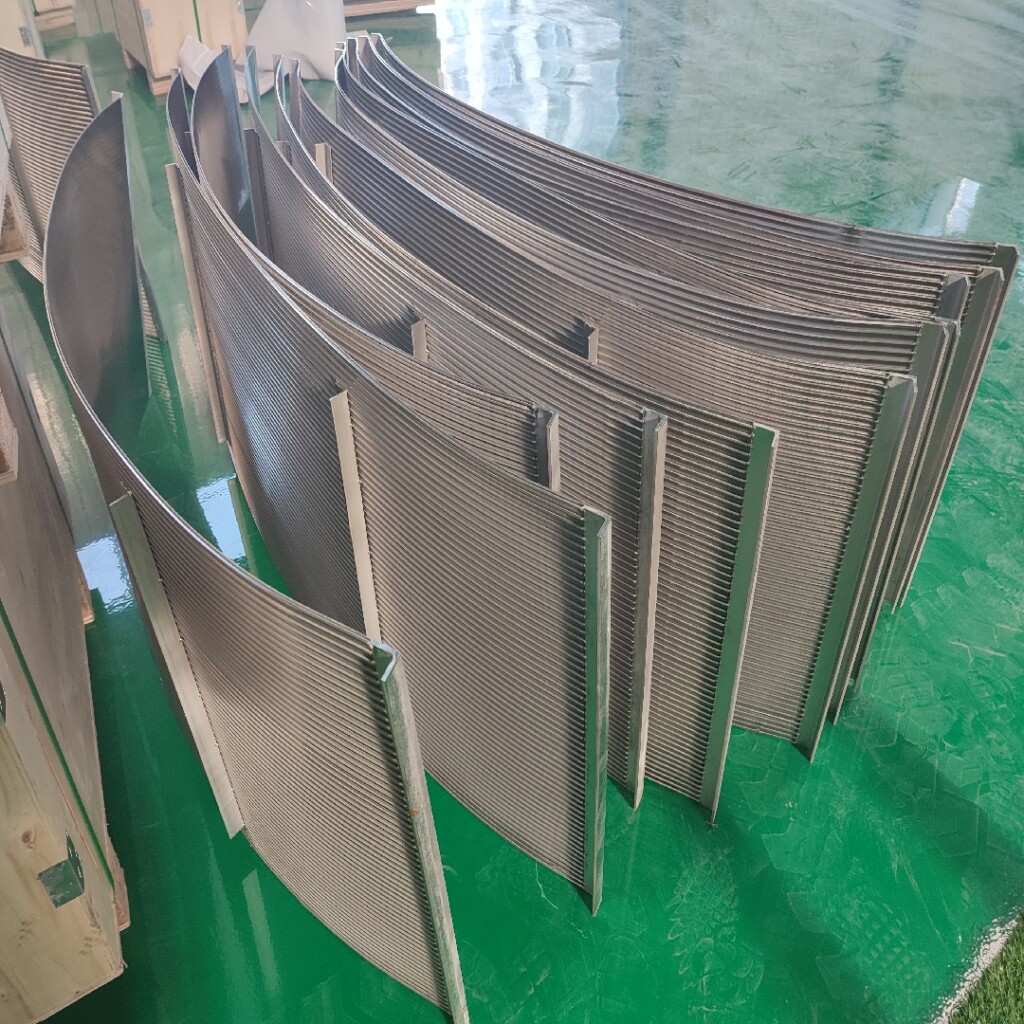
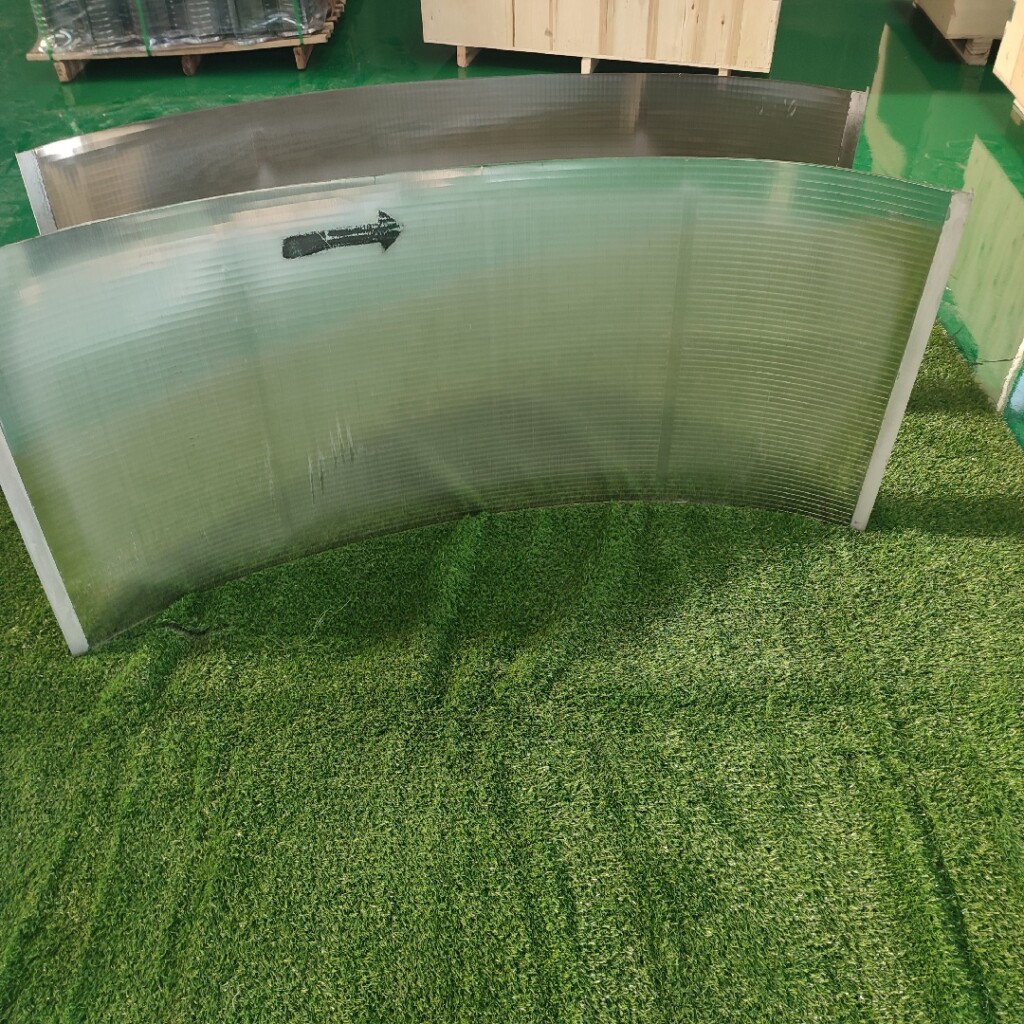
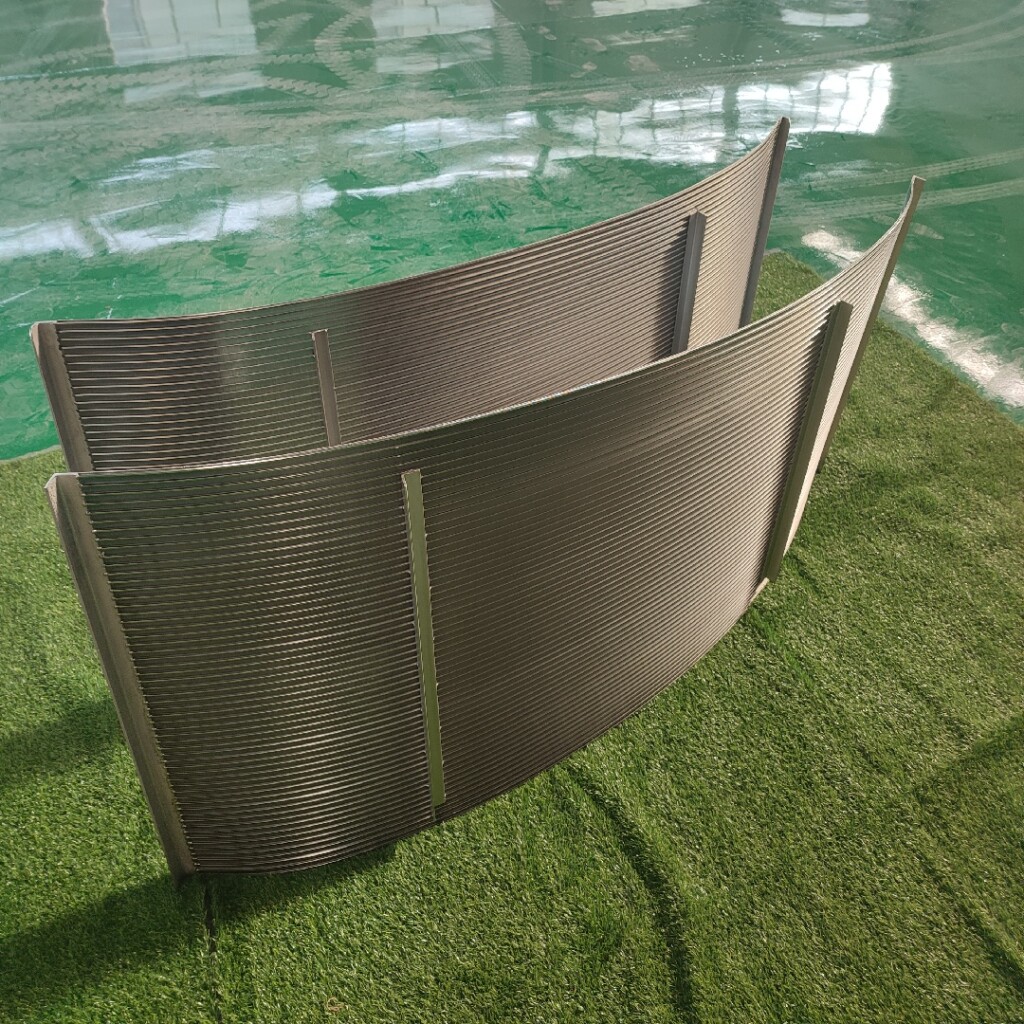
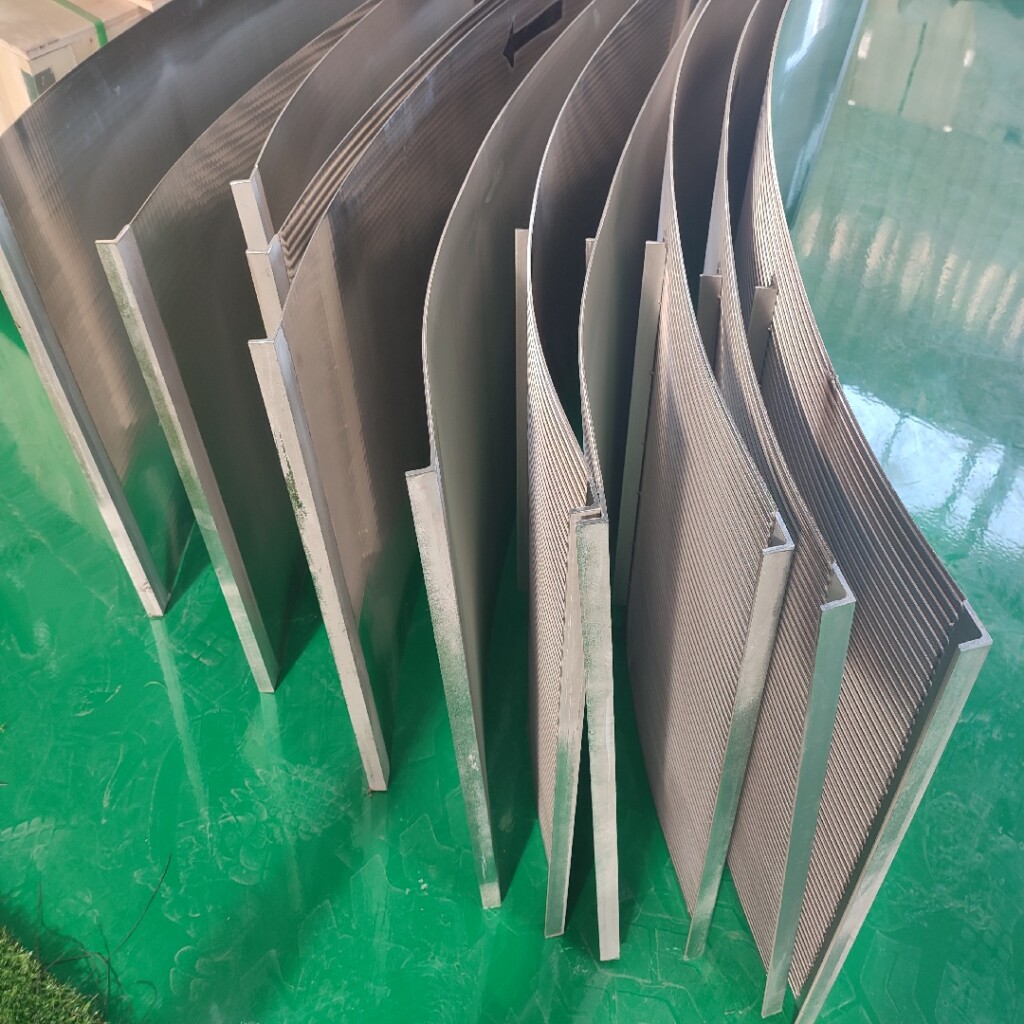
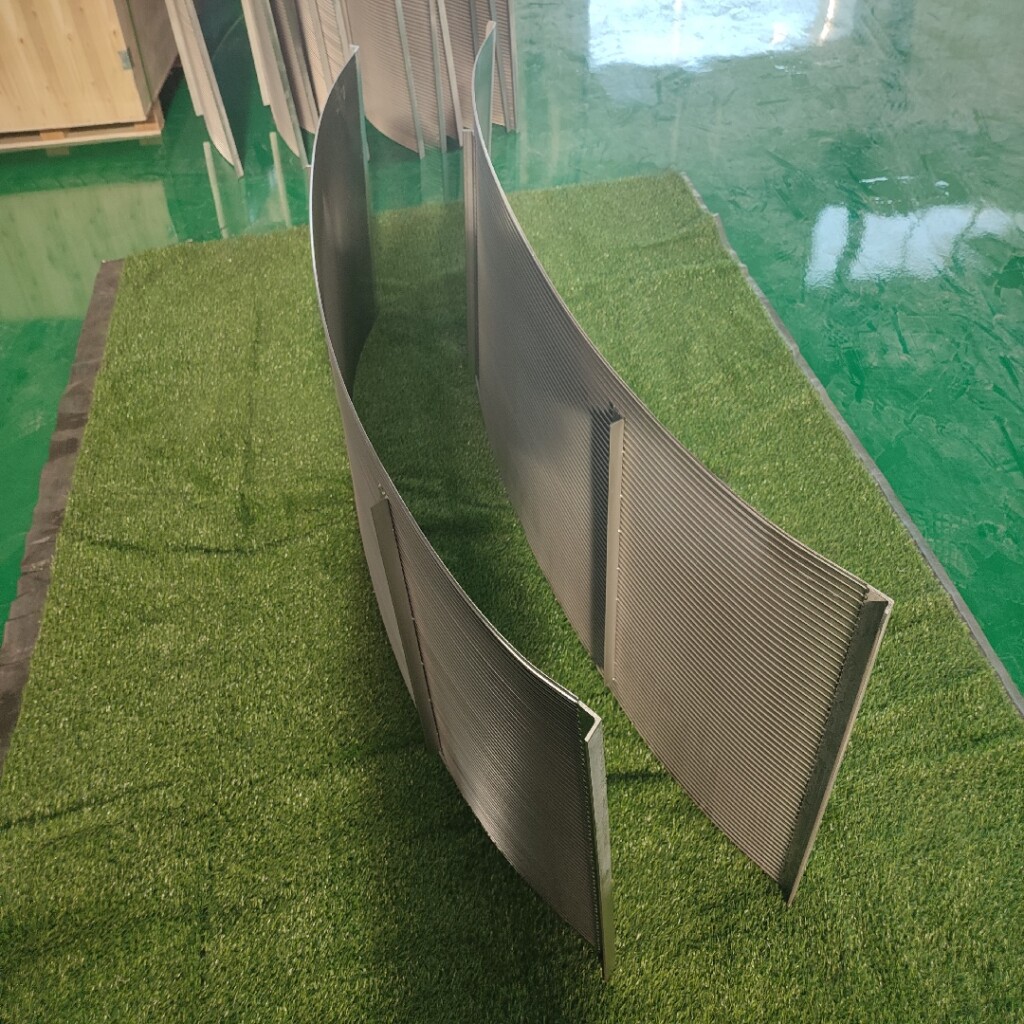
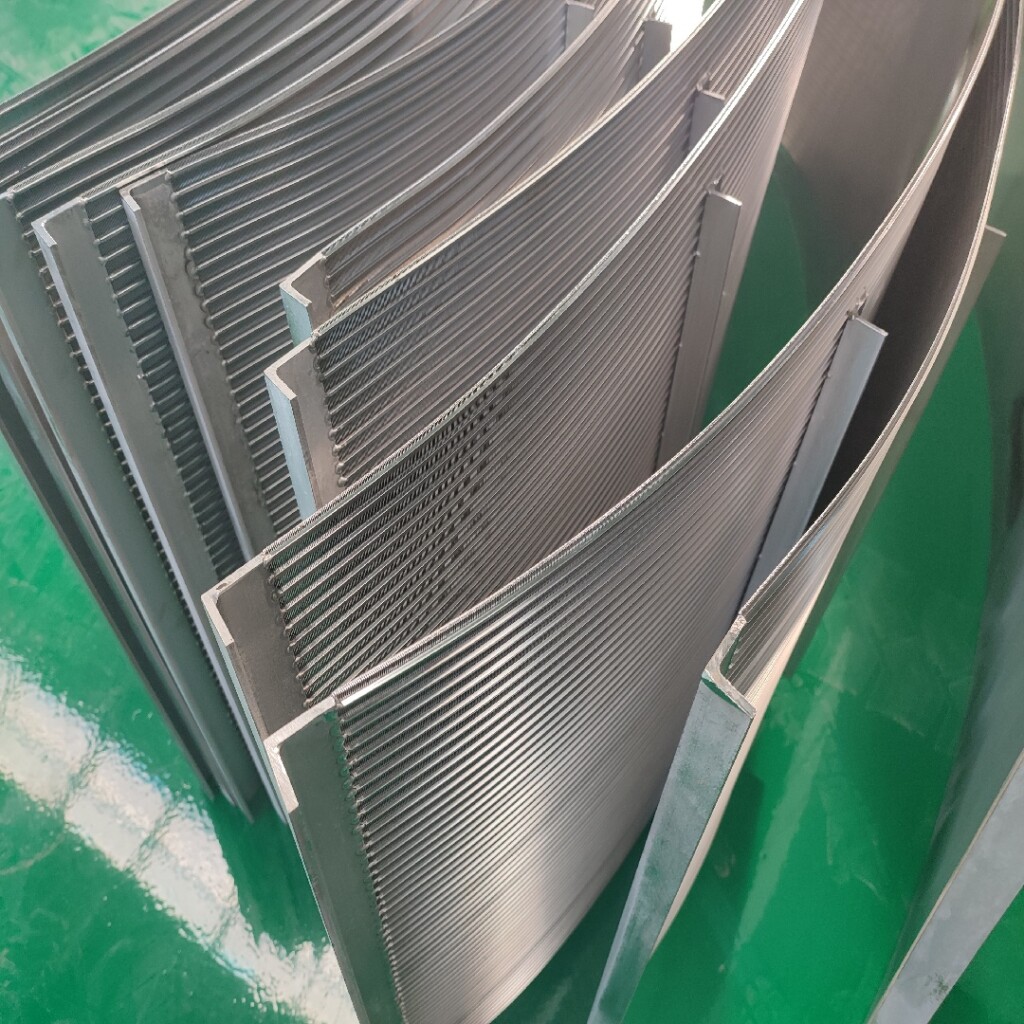
As a high-efficiency filtration and separation component, wedge wire curved screens (also known as curved wedge wire screens) are innovatively crafted by bending flat wedge wire screens into a curved configuration—bringing unparalleled performance to industrial sorting, dewatering, and classification processes. These screens leverage the unique advantages of wedge wire (also referred to as profile wire or V-wire) technology to deliver reliable and adaptable solutions for diverse industrial needs.
The operating principle of curved wedge wire screens is both simple and effective: as the substrate (raw material or process fluid) flows smoothly over the curved screen surface, large solid particles are efficiently retained due to the screen’s precise slot structure. These trapped particles then settle and collect at the bottom of the screen, while the filtered fluid or fine particles pass through the slots—achieving rapid and efficient solid-liquid separation or particle classification without compromising process continuity.
What distinguishes these curved screens is their array of performance and design advantages. Firstly, they offer narrow surface profiles, which maximize the number of effective slots per unit area, significantly boosting separation capacity and throughput. Secondly, the wedge wires can be slightly tilted to create an array of sharper edges, enhancing the screen’s ability to capture and separate particles, thus improving overall separation efficiency. Thirdly, design flexibility is a key highlight—they are available in a wide range of dimensions and curvature options, allowing customization to fit specific equipment setups and process requirements. Additionally, the continuous slot structure inherent to wedge wire technology provides a larger open area compared to traditional wire mesh or perforated metal, ensuring unobstructed flow, reducing pressure drop, and minimizing operational energy consumption.
These curved screens find extensive application across multiple industrial sectors. They are widely used as sieve bends for dewatering and classification tasks, delivering precise separation of solids and liquids in various processing lines. In the starch industry, they serve as specialized starch screens, ensuring the purification and refinement of starch by effectively removing impurities. Moreover, they play a crucial role in the paper and pulp industry, facilitating fiber recovery and pulp thickening processes—key steps in optimizing resource utilization and improving product quality.
To adapt to different operating environments and media characteristics, wedge wire curved screens are manufactured from a diverse range of high-quality corrosion-resistant stainless steel alloys. The material selection includes standard options such as AISI 430 (DIN 1.4016/UNS S43000), AISI 304 (DIN 1.4301/UNS S30400), AISI 321 (DIN 1.4541/UNS S32100), AISI 316L (DIN 1.4404/UNS S31603), and AISI 316Ti (DIN 1.4571). For more demanding harsh conditions, special alloys like DIN 2.436 (UNS N04400/Monel 400), DIN 2.4819 (UNS N10276/Hastelloy C276), and super duplex steels (AISI 2205 and 2507) are also available, providing exceptional resistance to corrosion, abrasion, and extreme temperatures.
Beyond their specific advantages, these curved screens inherit all the inherent benefits of wedge wire technology. Compared to conventional wire mesh and perforated metal, their continuous slots offer superior durability, as surface wear has minimal impact on slot width, ensuring long-term performance stability. The V-shaped surface wires form continuous slots that create two-point contact with particles, minimizing clogging and simplifying cleaning—greatly reducing maintenance efforts and downtime. Furthermore, the robust construction, combined with additional support structures when needed, enables the screens to withstand extreme load conditions, making them a reliable choice for high-intensity industrial operations.
Whether for dewatering, classification, impurity removal, or resource recovery, wedge wire curved screens stand out as a versatile, efficient, and durable solution—empowering industries to optimize processes, reduce costs, and enhance product quality.
FAQ
FAQ 1: What is a wedge wire curved screen, and how does it work?
A wedge wire curved screen (also called a curved wedge wire screen) is a high-performance filtration and separation component manufactured by bending flat wedge wire (V-wire/profile wire) screens into a curved shape. It is designed for industrial processes requiring efficient solid-liquid separation, classification, or dewatering.
Its working principle is straightforward yet effective: When the substrate (process fluid, raw material, or slurry) flows over the curved screen surface, the precise continuous slots of the wedge wire structure trap large solid particles. These retained particles accumulate at the bottom of the curved screen due to gravity and the fluid’s flow direction, while the filtered fluid or fine particles pass through the slots—achieving rapid and reliable separation without disrupting the overall process flow.
FAQ 2: What are the key advantages of wedge wire curved screens compared to traditional screening media?
Wedge wire curved screens offer significant advantages over conventional options like wire mesh or perforated metal:
- Higher separation capacity: Narrow surface profiles maximize the number of effective slots per unit area, boosting throughput and processing efficiency.
- Enhanced separation efficiency: Slightly tilted wires create sharper edges, improving the screen’s ability to capture and separate target particles.
- Larger open area: Continuous wedge wire slots provide a greater open area than traditional media, reducing pressure drop and ensuring smooth fluid flow.
- Anti-clogging performance: The V-shaped wire design forms two-point contact with particles, minimizing adhesion and clogging. The smooth surface also simplifies cleaning.
- Design flexibility: Available in a wide range of dimensions, curvatures, and slot sizes, allowing customization to fit specific equipment and process requirements.
- Durability: Robust wedge wire construction resists wear and abrasion, maintaining slot integrity over time. It also withstands extreme load conditions with optional additional supports.
- Low maintenance: Easy-to-clean surfaces and long service life reduce downtime and maintenance costs.
FAQ 3: Which industries and applications are wedge wire curved screens suitable for?
Wedge wire curved screens are versatile and widely used in industries requiring efficient separation, dewatering, or classification, including:
- General industrial processing: Used as sieve bends for dewatering or particle classification, 适配 various processing lines needing solid-liquid separation.
- Starch industry: Specialized as starch screens to remove impurities and refine starch products, ensuring product purity.
- Paper and pulp industry: Critical for fiber recovery and pulp thickening processes, optimizing resource utilization and improving pulp quality for paper production.
- Other applications: Suitable for any scenario requiring screening, filtering, dewatering, sizing, or cleaning—thanks to their customizable design and corrosion resistance.
FAQ 4: What materials are wedge wire curved screens made of, and how to select the right one?
Wedge wire curved screens are manufactured from high-quality corrosion-resistant stainless steel alloys to adapt to diverse operating environments. Common materials include:
- Standard stainless steels: AISI 430 (DIN 1.4016/UNS S43000), AISI 304 (DIN 1.4301/UNS S30400), AISI 321 (DIN 1.4541/UNS S32100), AISI 316L (DIN 1.4404/UNS S31603), AISI 316Ti (DIN 1.4571)
- Special alloys: DIN 2.436 (UNS N04400/Monel 400), DIN 2.4819 (UNS N10276/Hastelloy C276)
- Super duplex steels: AISI 2205, 2507
Material selection guide:
- Choose AISI 304 or 430 for general-purpose applications with mild corrosion and moderate temperatures (e.g., basic starch processing or low-humidity environments).
- Opt for AISI 321, 316L, or 316Ti for applications involving higher temperatures, humidity, or mild corrosive media (e.g., pulp processing with chemical additives).
- Select Monel 400 or Hastelloy C276 for extreme chemical corrosion (e.g., strong acids, alkalis, or chloride-containing media) in harsh industrial settings.
- Use super duplex steels (2205, 2507) for high-pressure, high-corrosion conditions requiring both exceptional strength and corrosion resistance.
FAQ 5: Can wedge wire curved screens be customized, and what customization options are available?
Yes, wedge wire curved screens offer extensive customization to meet specific application needs. Key customization options include:
- Dimensions: Custom length, width, and thickness to fit existing equipment or new system designs.
- Curvature: Tailored curvature radius to optimize fluid flow and separation efficiency based on process requirements.
- Slot specifications: High-precision slot sizes (customizable to match particle separation needs) and slot directions (adapted to flow dynamics).
- Wire configuration: Adjustments to wire tilt angle to enhance particle capture for specific materials.
- Additional features: Integration of flanges, mounting brackets, or reinforcement structures for easy installation and improved structural stability in high-load environments.
FAQ 6: How to maintain wedge wire curved screens to prolong their service life?
To ensure optimal performance and longevity, follow these maintenance tips:
- Regular cleaning: Use water or compatible cleaning agents to flush the screen surface, removing accumulated particles. Avoid abrasive cleaners that may damage the wedge wire surface.
- Periodic inspection: Check for signs of wear, wire deformation, or clogging—especially after high-intensity operations. Address minor issues promptly to prevent performance degradation.
- Proper installation: Ensure correct alignment and secure mounting to avoid uneven stress distribution during operation, which can cause premature wear.
- Material compatibility: Use the screen with fluids and particles compatible with its alloy material to prevent chemical corrosion.
- Controlled operation: Adhere to the manufacturer’s recommended limits for temperature, pressure, and flow rate to avoid overloading the screen.